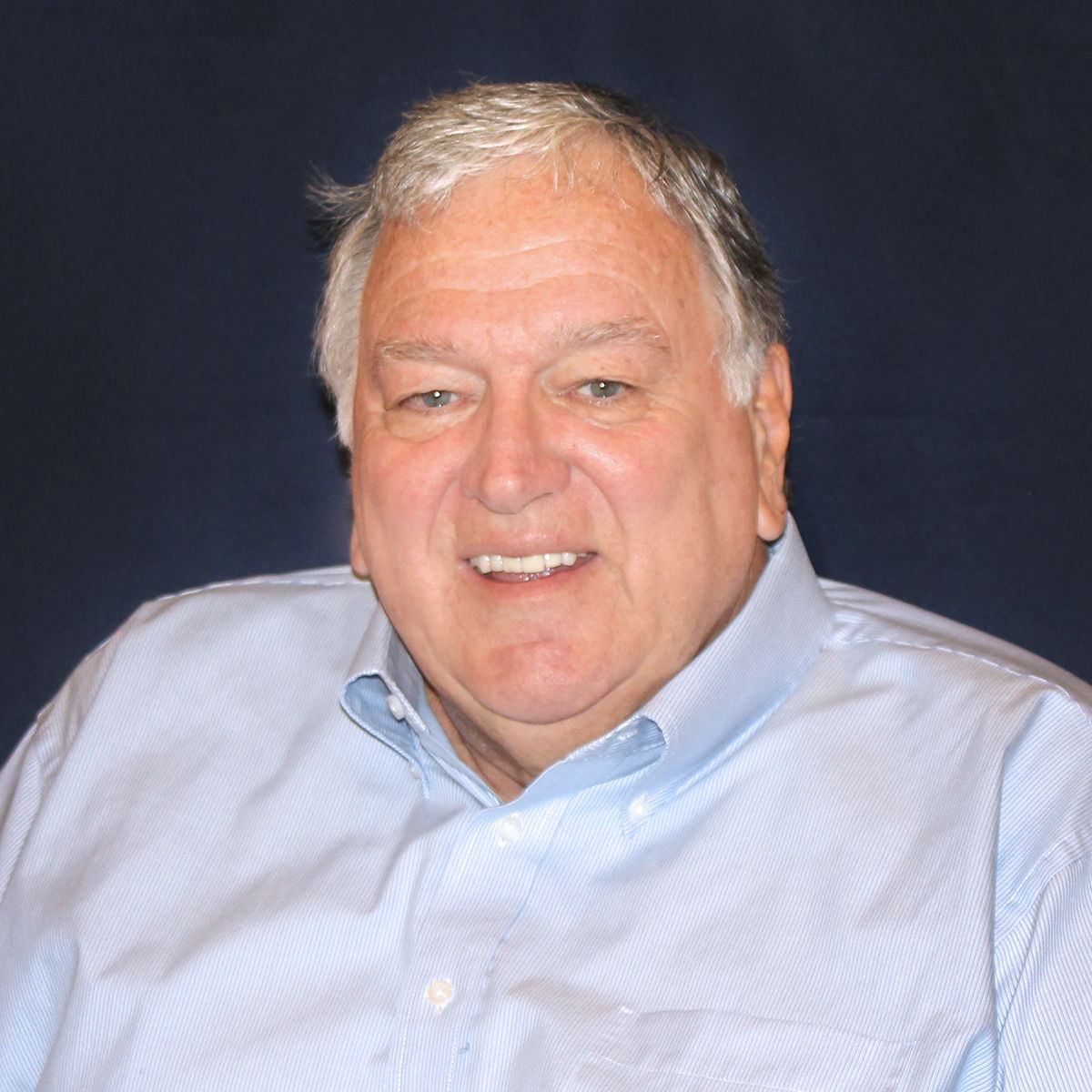
Celebrating The Life and Legacy of John W. Gleeson
There are some people you don’t realize you’ve been leaning on until they’re gone. John W. Gleeson was one of those people.
He was the kind of man whose name surfaced naturally in moments of uncertainty. The kind you called on long drives, when the road was empty and your mind wasn’t. The kind whose voice — steady, deliberate and unmistakably his — had a way of slowing things down, helping you think more clearly, even if you didn’t realize it in the moment.
John passed away peacefully in his sleep on Dec. 24, 2025.
For Delta Tau Delta, John Gleeson occupied a unique space. He was deeply present, and his influence lived in conversations, ideas exchanged, and systems questioned and improved. He believed in fraternity as a lifelong practice — something that required attention, responsibility and care long after graduation.
Gleeson’s story began in Fort Wayne, Indiana, where he was born in 1946, before his family settled in Arlington Heights, Illinois. By the time he arrived at the University of Illinois in the mid-1960s, the world — along with campus life — was quickly changing. Institutions and their value were questioned, and futures felt uncertain. Gleeson found his place in Delta Tau Delta’s Beta Upsilon chapter, where he eventually served as chapter president and graduated in 1968.
It was a time when certainty was in short supply. For many students, college felt less like a straight path and more like a series of choices without clear answers. You were expected to decide what mattered to you and to do it sooner than you might have liked. Campuses were louder, opinions sharper, and the rules that guided earlier generations were openly questioned.
Those years were formative for John. What stayed with him was not a single moment, but the structure of fraternity life — along with the expectation that you showed up, worked with people who didn’t think exactly like you, and took responsibility for something larger than yourself.
After graduation, Gleeson returned to Walgreens, a place that had already been part of his life for years. His father managed the local store, and Gleeson had first worked there as a teenager, stocking shelves and learning the rhythm of the business from the ground up. He joined the company formally in 1969 as an analyst and remained with Walgreens for more than four decades, retiring in 2008 as senior vice president and chief strategy officer. Along the way, he played a significant role in the company’s growth, including early work on the freestanding store concept and leading the Strategic Management System project the company still utilizes today.
Even with those accomplishments, Gleeson rarely led with his title. He was far more interested in how things worked, why decisions were made, and what could be done better next time. Colleagues and friends often described him as thoughtful and strategic, and just as often noted his willingness to listen before speaking.
Gleeson was an extraordinary leader whose service and generosity shaped Delta Tau Delta for more than two decades. Over his 23 years of dedicated involvement with the Delta Tau Delta Educational Foundation, 18 of which he served as treasurer, John provided steadfast financial leadership, strategic vision and a deep personal commitment to advancing the Fraternity’s mission.
His lifetime of service was recognized with the Alumni Achievement Award in 2006 and again at the highest level when he was awarded the Distinguished Service Chapter in 2023, the Fraternity’s most prestigious honor.
John was also a proud and loyal member of several donor recognition groups, including the Bethany Society, the Order of the C--- and the Heritage Society, reflecting both his generosity and his belief in supporting future generations of Delts.
Gleeson believed deeply that fraternity chapters weren’t social clubs, but “learning laboratories” — places where young men practiced leadership in real time. Individuals couldn’t hide behind grades but instead showed up for one another. He often described chapters as ecosystems made up of those who gave and those who took. In his view, leadership — whether within a fraternity or a business — wasn’t about control. It was alignment in its most honest form.
Those closest to John knew he loved to debate. He welcomed being told he was wrong, especially if you could explain why. The space he made for disagreement often created room for more innovative ideas.
Even into his eighties, John was still researching fraternity chapters, building databases and tracking alumni presidents by hand when no system yet existed. He believed alumni mattered — not just as lifelong members, but as stabilizers.
Gleeson made a point of connecting with younger members, not as an authority figure but as someone genuinely interested in their experiences. He offered guidance when asked and support when needed. For many, he became a mentor without ever insisting on the title.
Outside of work and fraternity life, Gleeson pursued his interests with the same focus. He loved music and played bass guitar, forming a band with colleagues during his years at Walgreens and continuing to play after retirement. He spent time restoring vintage cars and working on estate projects, including renovations to his family home in Lincoln Park.
Gleeson also loved cars, especially one model in particular: a 1967 Pontiac Bonneville convertible — the exact same model he drove in college. Back then, he and his chapter brothers would pile in and roam around campus. Decades later, John tracked one down and restored it completely. In a very John way, he recreated many of those rides with the same people, as if time had simply bent instead of passed.
What people remember most isn’t the resume; it’s the character and conduct behind the man. John mentored relentlessly. He connected generations and made young men feel seen and challenged in equal measure. He believed masculinity wasn’t something to apologize for, but something to practice responsibly.
John Gleeson was an idea guy, a builder, a debater, a musician, a mentor and a believer — in fraternity, in people and in the belief that we can all create something bigger and better than what is before us.